Tuesday, 16 December 2014

History of the Music Video

The 1940's was when the the tradition of pop music began. The most popular artist at the time was Bing Crosby. He was seen singing in his movies and TV shows. He had many fans which made the tv shows a success. This is were the idea of music videos evolved from.


Frank Sinatra was then began the biggest star of the 1950s replacing Bing Crosby ,  like him Frank was usually seen in TV shows movies and concerts. Sinatra started in 1935 when his mother persuaded a local singing group, The Three Flashes, to let him join. With Frank joining the group, they then became known as the Hoboken Four and they sufficiently impressed Edward Bowes. After appearing on his show, Major Bowes Amateur Hour, they attracted 40,000 votes and won first prize. Soon after Sinatra chose to go solo and got signed to Columbia records.


During the late 1950s Elvis took over popularity. Elvis was known to be the most significant cultural icons of the 20th century and was declared 'the King of Rock and Roll'. Elvis became the leading figure of rock and roll after shown on a series of network TV appearances and chart topping records. He energised interpretations of songs and sexually provocative performance style in which made him very popular and controversial. Elvis then had a 2 year break and then went back stronger than ever, appearing in Hollywood films and recording the soundtracks for the films. 


The Beatles were introduced in the 1960's. They were an english band who began incredibly popular and successful. They used to travel to America and perform of shows but after a while they got tiresome of this and decided to film themselves singing and playing music in Hampstead Heath London and that was one the first pop music videos ever made. It was for their song called 'Paperback writer'. We see qualities of this that are still popular in modern music videos. There is a are a lot of close up's of the four musicians in the video. The use of fast pace editing is incorporated as there are a lot of cut and different angles and camera movements. They are filmed playing music which is a convention of band music videos. 


The music video for rain is very similar to their first one but this one is better because the they edit the music video to the beat. There is much more increase in close up's and interesting shots. We see in this that they have began to evolve their use of music videos and are making them more dynamic.


Shot List

Shot List

Scene
Shot Number
Description
1


2


3


1-6


6-9


9-11 


Low angle shot girls walking up the stairs.

 Medium shot of
the girls on the stage

Close up of the main singer singing

The main singer  skate park. Medium shot.

Long shot facing graffiti at the park of main singer. 

Medium shot of boys talking 

Low angle shot of skating on a ramp 

Pan of boy (shaky) 

Over the shoulder shots of boy and girl talking 

Tracking shot of boy teaching girls to skate. 

Rolling shot on stage of secondary girl 

Close up of main girls singing 

Tracking shot of boy and girl at the park. 

Close up main singer 

Establishing scenery shot 

Long shot of boy and girl walking away 


Tuesday, 9 December 2014

Starting the editing process

I have started editing and am making sure that I am editing to the beat , I'm doing this by listening closely to the song and using markers by pressing the 'M' key on the keypad. This created green markers at the top to show me where there is changes in the beat.
There where too many cuts to the music video so , I have not began adding some other edits , this is a fade out that I added right at the end of the music video so it doesn't stop abruptly and it in however does so gradually as the song actually fades out as well , this was much more effective and looked more professional.


 I noticed that most of the transitions in the video where just cuts and after a while it looked rushed and it gave no indication to when scenes and shots where linked. So I decided to make the transitions smoother by adding things such as dissolves and fade in's this connects two different locations and it also keeps the video more exciting and visually pleasing.

Tuesday, 2 December 2014

Case Study - Emil Nava

•Began as a runner for film production companies

•Worked for Blink Productions

•Now freelances for OB Management

•After working as a runner graduated to Assistant Director (A.D.) where he would manage the video shoots

•He signed to Academy – who are the biggest music video production company


•Then worked for Between the Eyes and now works mainly for Pulse
Emil’s first budget was for the band Kid British and the track Our House. The budget was £20,000. It was shot in Manchester using the local people. It took one day to film, two – three days to edit and 10 days of pre-production. It demonstrates the very tight time-scale involved.


At his busiest Emil has made 24 music videos in one year
When he began shooting videos for independent labels the budget would be as low as £5,000 to £10,000

His most expensive video to date has been for Jessie J and the budget was £160,000


His videos focus more on excitement and concepts. 

Emil has taken a big step in the media industry by creating adverts which generally have a far higher budget and production value but allow of less creative freedom. The advert that Emil directed was the L'Oreal ' Dare to be Different'. 


Friday, 28 November 2014

Case study - Jamie Thraves

  • Director – Jamie Thraves
  • Made short films at University
  • Used award-winning short film as a ‘calling card’ to get a ‘foot in the door’ with the video production company Factory Films
  • Began by shooting three very low budget music videos – cost about £5,000 each


As can be seen for many directors in the business it is a precarious existence where their livelihood is dependent on each commission. Jamie Thraves submitted treatments for his two best known videos and each was accepted. 
Radio-head – Just £100,000 budget. Shot in three days. His videos focus mostly on a small narrative that keeps the audience engaged. This is maybe because he wishes to be hollywood directer instead. 


Coldplay – The Scientist £200,000 budget. Shot in three days. This focuses on the emotion of the song and in turn draws an emotional response from the audience. 


   Jamie Thraves – most recent video – Japanese PopstarsSong for Lisa. Currently videos cost about £20,000    and was shot in two days. Jamie has used the music videos to get into the film business. He has now so far      shot 3 features:
   •The Low Down
   •The Cry of the Owl
   •Treacle Jr
       Use the lyrics but try not to be too literal. Most importantly  go with the emotion of the lyrics.


        Song for Lisa , has the lyrics 'you can not go home again' this phrase is best known for a novel  by Thomas Wolfes about not being able to change the past.  Jamie focuses on the metaphorical meaning of the phrase which suggests that you can never turn back time or go back to the past. He then goes with that by showing a girl having a day out when she was young and then having the same day when she's older and showing the contrast.  

Star Theory

Dyer believes artists are constructed through artificial images such as advertising, films, magazines and music. He claims that consumers prefer artists to convey their true emotions themselves and not be groomed by record labels who try to create a fake image for them. A “real” artist can use this as their unique selling point. An example is Ed Sheeran his selling point is the emotion in his music and his talent , he creates music he wants to create not music he thinks will sell , he shuns trendy styles and events and opts for a normal image and staying at home. This makes him  very endearing.
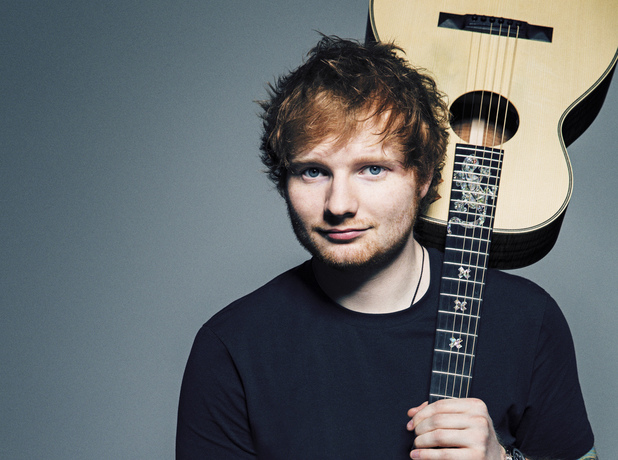


 Richard Dyer also believes that stars are manufactured to make money for their record labels by appealing to target audiences. As a result of this record labels have to market different artists to cater for certain target audiences as there are both ‘niche’ and ‘mainstream’ markets.
 Ideology And Culture

Another one of Dyers beliefs within his Star Theory is that artists become trendsetter in the sense that audience members will imitate hairstyles and artists clothing styles. Artists may have certain religious beliefs and cultural values that audiences may also pick up on if shared by the artist. The internet has meant audiences now have far greater access to the “personal” lives of stars. For example Arianna Grande has now announced on social media that she is a vegan and is against animal cruelty and manly of her fans are now adopting a vegan life style. 

 Stars support Hegemony 
Stars support hegemony  , this is by playing up to their stereotypes and reinforcing dominant ideology of their time. . Gramsci is best known for his theory of cultural hegemony, which describes how states use cultural institutions to maintain power in capitalist societies.
An example of this is Drakes song 'started from the bottom' it starts with him driving through upper class neighbour hood  in a nice car wearing all white. This is him at the top the best version of himself. The video keeps changing between him at a working at a store an obvious minimum wage job to him surrounded by people at party's and walking along his car.  This is supporting ideas of the american dream of earning money and living comfortably.  

Deconstruction of  Britney Spears


Britney raises interesting issues regarding female identity in pop music. Initially viewed as a role model for the teen girl market. From a gender perspective, Britney’s identity is placed securely within a male-dominated industry that manufactures limited stereotypes of femininity. 
In her early videos Britney was surrounded by ‘girlie iconography’ – bedroom culture, dolls, dressing up with friends, hanging out, applying make-up. Teen pigtails complete the image! Choreographed dance routines create the desire to be part of ‘her gang’.

In her early videos Britney was surrounded by ‘girlie iconography’ – bedroom culture, dolls, dressing up with friends, hanging out, applying make-up. Teen pigtails complete the image! Choreographed dance routines create the desire to be part of ‘her gang’.


However later in her career , in opposition to this innocence is an underlying sexuality. In her song I'm a slave 4 u we can apply Laura Mulvey's theory of the male gaze.  Throughout the video she is an object of erotic desire. She dances while the males in the room observe her. Even the title of the       song suggests objectification. Because the music industry is male dominated they control her image and therefore turn her into an erotic object in order to boost her popularity. 


In between the time before her video 'I'm a slave 4 u' and 'Sometimes' Britney Spears went through a change. This began with her song 'baby one more time'. This video appears to be innocent but it has very suggestive lyrics , the high school setting makes it even more perverse.


When it comes to gender debates, Britney Spears’s Music Videos are a polysemic text (a text that has multiple meanings). N.B. Her career has evolved from ‘Teen Princess’ with connotations of innocence and girliness to a half naked woman who performs for a male audience in FHM and Loaded.  Both identities are stereotypical visions of femininity as presented in a range of media texts. 
Britney Spears went through a breakdown and since then she made her return with a song 'hold it against me' in which she rejects her constructed image. The video starts with her falling into what appears to be a set with a lot of people taking pictures this shows how fake and constructed the image from the media is. She has restrains on her hands that are wires linked the the images of her old videos on the screens which is her saying how she was bound by her image.  She wears a white dress which could symbolise her innocent image. After she starts to squirt paint onto her images on the screens suggesting  she is attacking her old image. She also fights herself in her video suggesting she is fighting between the real her and the image of her constructed by the media. At the end she breaks free and seems very empowered. 


Risk Assesment


Hazard
Person(s) at Risk
Likelihood of Hazard
1 – Extremely Unlikely
5 – Extremely Likely
Severity of Hazard Outcomes
1 – Very Low Risk
5 – Very High Risk
Risk Level
(Likelihood + Severity)
2
Measures to Take to Manage Risk
Risk Managed?
Y/N
Filming the skate park of people skating could get hit by skate boarder. 
The cameraman.
2
2
2.5
Make sure to film from a far distance away from the skate boarders 
yes
Skate boarders at the skate park might collide with people  
everyone 
1
3
Keep everyone to the sidelines when possible and watch out for other skaters. 
yes
Filming along side the lake. And weather. 
Equipment and everyone. 
3
3
3
I will bring an umbrella to aviod the spitting rain. We will also stand as far away from the lake as possible to avoid falling in.
yes
The stage we will be performing at will be high and there is a risk of falling down. 
The women
4
2
3
We will film at the bottom part of the stage and be cautious when going up and down the stage 
yes

Costume and props

Artist Profile


Melanie Ungar:


  • She's 21 years of age 
  • Her genre is country pop 
  • Her target audience is teen- young adult girls 

She is a 21 year old unsigned singer song writer from Canada who has always had a passion for music. She was a top 3 finalist in the John Lennon Song writing Contest, a Semi-finalist in Unsigned Only & ISC.  and a Reverberation featured artist. 


Location


Narrative Theory

What is Narrative theory ? 

There are many elements to narrative theory; time, closure and enigma. The time the text covers is usually in chronicle order, however it may include flashbacks to the past. All texts in narrative theory needs closure, this means that there is a clear ending, all the questions the movie sets are answered. The last element in enigma, these are the questions that the movie asks it is also the problems that the movie sets, these need to be answered, for example who is the kidnapper?
Classical Hollywood Narratives are linear, going from start to end in chronicle order, they do not include flashbacks. There are also very few, if any, sub-plots to these narratives and they usually end in closure.


The theories of narrative was thought of by a man called Tzvetan Todorov. He said that the films start in an equilibrium (everything is normal to the characters), there is then a disruption (which is the problem the characters have to solve, for example; a murder), after this there is a resolution (for example; a revenge for the murder) and lastly there is a new equilibrium (due to the problem the characters are not the same as before, something has changed and therefore, although they live a normal life again it is not as before).

Using Vlaimir Propps 8 characters in stories For Eminem Stan

Hero- Eminem
Villain- Stan
Donor- Eminem
Helper- Girlfriend
Father- Eminem
Dispatcher-
Princess- Eminem
False Hero


Applying Tzvetan Tudorov's theory to Eminems stan.

The equilibrium in the video is Stan is where stan is a big Eminem fan and he is living at home with his pregnant girlfriend. The disruption is When Eminem doesn't reply to his letters.The resolution to the video is where he kills him and his girlfriend by driving off a bridge. The new equilibrium is stans little brother who is also a big Eminem fan who follows in stans footsteps by dying his hair blonde.

Audience research

Audience research can be done in a number of different forms. These include: questionnaires , survey's and interviews. Some of the questions that I could ask the audience include:


  • What do you think makes a good music video ? 
  • What kind of music videos appeal to you ?  
  • What is you favourite music video ? 
 I will ask these questions to people of a varied young demographic and find out what is the most effective music video.

Treatment


Treatment
Group Roles

Cinematography: Ropafadzo Mugadza
Mise-en-scene: Ropafadzo Mugadza
Sound:Ropafadzo Mugadza 
Editing: Ropafadzo Mugadza


Title:
Deeper for you by Melanie Ungar 


Synopsis:

A girl will be admiring a boy at a skate park. They will talk and hang out. There many shots of the boy skating and the eventually her friends push her into talking to him and he seems to take an interest in her. The audience gets to watch as they interact and get to know each other and become closer and more acquainted we see the boy and girl start to skateboard with the guy. Towards the end we see that are now together and we witness them on a date.


Key Genre Conventions:

Typical boy meets girls love story video. There will be many close-ups of the artist and the story line of the music video will parallel the song lyrics, which is a key convention in music videos. There will be a narrative in the video , that will be presented along side shots of the artist lip synching.