Dyer
believes artists are constructed through artificial images such as advertising,
films, magazines and music. He claims that consumers prefer artists to
convey their true emotions themselves and not be groomed by record labels who
try to create a fake image for them. A “real” artist can use this as their
unique selling
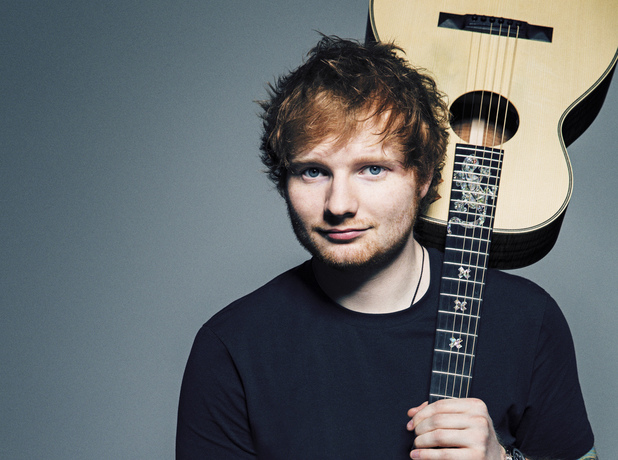
point. An example is Ed Sheeran his selling point is the emotion in his music and his talent , he creates music he wants to create not music he thinks will sell , he shuns trendy styles and events and opts for a normal image and staying at home. This makes him very endearing.
Richard
Dyer
also believes that stars are manufactured to make money for their record labels
by appealing to target audiences.
As a
result of this record labels have to market different artists
to
cater for certain
target audiences as there are both ‘niche’ and ‘mainstream’ markets.
Ideology
And Culture
Another
one
of Dyers beliefs within his Star Theory is that artists become trendsetter in
the sense that audience members will imitate hairstyles and artists clothing
styles. Artists
may
have certain religious beliefs and cultural values that audiences may also pick
up on if shared by the artist.
The internet
has meant audiences now have far greater access to the “personal” lives of
stars. For
example Arianna Grande has now announced on social media that she is a vegan and
is against animal cruelty and manly of her fans are now adopting a vegan life
style.
Stars support Hegemony
Stars
support
hegemony , this is by playing up to their stereotypes and reinforcing dominant ideology of their time. .
Gramsci is
best known for his theory of cultural hegemony,
which describes how states use cultural institutions to maintain power in
capitalist societies.
An example of this is Drakes song 'started from the bottom' it starts with him driving through upper class neighbour hood in a nice car wearing all white. This is him at the top the best version of himself. The video keeps changing between him at a working at a store an obvious minimum wage job to him surrounded by people at party's and walking along his car. This is supporting ideas of the american dream of earning money and living comfortably.
Deconstruction of Britney Spears
Britney
raises interesting issues regarding female identity in pop music.
Initially viewed
as a role model for the teen girl market. From a
gender perspective, Britney’s identity is placed securely within a
male-dominated industry that manufactures limited stereotypes of femininity.
In
her early videos Britney was surrounded by ‘girlie iconography’ – bedroom
culture, dolls, dressing up with friends, hanging out, applying make-up.
Teen pigtails
complete the image!
Choreographed dance
routines create the desire to be part of ‘her gang’.
In her early videos Britney was surrounded by ‘girlie iconography’ – bedroom culture, dolls, dressing up with friends, hanging out, applying make-up. Teen pigtails complete the image! Choreographed dance routines create the desire to be part of ‘her gang’.
However later in her career , in opposition to this innocence is an underlying sexuality. In her song I'm a slave 4 u we can apply Laura Mulvey's theory of the male gaze. Throughout the video she is an object of erotic desire. She dances while the males in the room observe her. Even the title of the song suggests objectification. Because the music industry is male dominated they control her image and therefore turn her into an erotic object in order to boost her popularity.
In between the time before her video 'I'm a slave 4 u' and 'Sometimes' Britney Spears went through a change. This began with her song 'baby one more time'. This video appears to be innocent but it has very suggestive lyrics , the high school setting makes it even more perverse.
When
it comes to gender debates, Britney Spears’s Music Videos are a polysemic text
(a text that has multiple meanings). N.B. Her career has evolved from ‘Teen
Princess’ with connotations of innocence and girliness to a half naked woman
who performs for a male audience in FHM and Loaded. Both identities are stereotypical visions of
femininity as presented in a range of media texts.
Britney Spears went through a breakdown and since then she made her return with a song 'hold it against me' in which she rejects her constructed image. The video starts with her falling into what appears to be a set with a lot of people taking pictures this shows how fake and constructed the image from the media is. She has restrains on her hands that are wires linked the the images of her old videos on the screens which is her saying how she was bound by her image. She wears a white dress which could symbolise her innocent image. After she starts to squirt paint onto her images on the screens suggesting she is attacking her old image. She also fights herself in her video suggesting she is fighting between the real her and the image of her constructed by the media. At the end she breaks free and seems very empowered.


